Honeycomb Wildlife Behavior: Trust, Nests, and Reactions
Use this Honeycomb wildlife reference to scan animals and nests, interpret observed reactions, and separate demonstrated trust actions from unverified species rules.
What can a wildlife scan reveal?
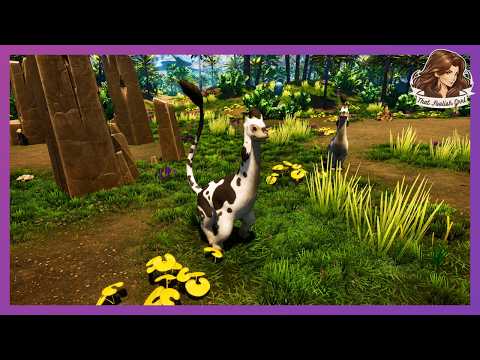
Use AR mode and the analyzer on an animal or its nest. The footage shows nests providing family information and scans adding fauna entries to the compendium. A nest sample is evidence about that nest, not proof that every member of a species uses the same family structure.
How should I read an animal’s reaction?
Keep distance until the analyzer identifies the animal and its current response. The observed labels include cautious, skittish, unsure, neutral, curious, and hostile or territorial behavior. These labels describe the encounter state shown in the footage; they are not a complete universal temperament chart.
| Observed response | Safe next step |
|---|---|
| Cautious or skittish | Stop chasing and observe from farther away |
| Neutral or curious | Scan first, then try the demonstrated interaction |
| Friendly | Try the confirmed treat or follow interaction |
| Territorial or hostile | Leave the nest area and carry medical supplies |
How is trust built?
The videos demonstrate copying an animal’s movement, approaching after it responds, petting it, and later offering a suitable treat. Trust appears to be tracked per individual. Some footage also suggests that a friendly animal can follow and may need to be led to a compatible nest, but the permanent-bond rule still needs game-text confirmation.
The animal trust guide covers the practical sequence. Use the starting map for the early exploration area and the survival guide when a territorial creature causes an injury.
Which wildlife has official regional descriptions?
Frozen Way’s field surveys identify several species by region. The Valley survey describes Lucuma Camilla as a sociable ungulate that can mimic and may follow after trust is earned, Wild Green Zuma as timid near open water, Gum Nibis as territorial around nests, and Scorchweaver as a hostile species. The Headlands survey describes Imperial Strider as cautious and nest-associated, Bronze Wox as skittish and pack-oriented when threatened, Woodback Tortoise as docile, and Flux Beetle as harmless. (Official field surveys)
The Pass survey adds Azurite Lonebid, Thessalika Nango, and Skittertail. It describes the first as gentle but highly perceptive, the second as solitary and difficult to win over, and the third as passive microfauna. These are official descriptions, not a complete location, snack, drop, or companion database. Confirm those fields in-game before publishing them as facts.
Related videos



Related Articles
creatures
Honeycomb Animal Trust and Companion Guide
Learn how to approach, scan, feed, and research Honeycomb wildlife while separating confirmed animal-snack behavior from open launch-build questions.
tools
Honeycomb Analyzer and Research Tools Guide
Learn how to use AR mode, the analyzer, map markers, the wildlife camera, and research machinery to document Sota 7.
building
Honeycomb Base Connections: Range, Power, and Water
Honeycomb base connections use range indicators for water, power, and facilities; storage distances and multi-floor builds still need verification.
Was this helpful?
Thanks for the feedback!